



How Robot Palletising Improves Productivity Without Adding Headcount
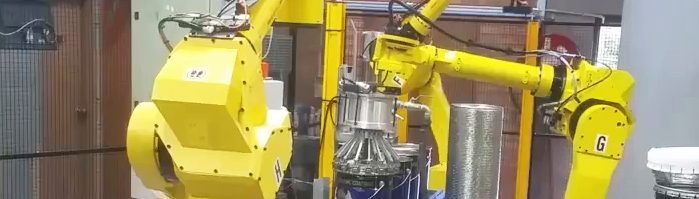
The productivity argument for robot palletising is straightforward: a robot runs faster, more consistently, and for longer than manual labour can. But the more useful way to think about it is what actually changes in your operation when you install one, and whether those changes matter for your specific situation.
Consistent Output Through the Whole Shift
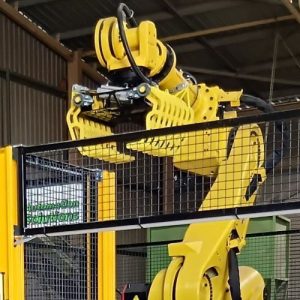
Manual palletising slows down as people fatigue through a shift. Stack quality varies. Layer heights drift. Load stability suffers. A robot palletiser runs at the same speed and places product to the same position whether it’s the first pallet of the day or the last one before the end of shift. That consistency has a direct impact on throughput predictability and on the quality of what leaves your facility.
Yankalilla Seeds in regional South Australia has stacked over 360,000 bags through their robot palletising cell over four years. Zero service calls, no service contract. The system runs, and it keeps running.
Flexibility Across Products and Patterns
A robot palletiser stores multiple programs and switches between them at operator selection. Different products, different pallet patterns, different layer counts, all handled without hardware changes. If your product range changes or you take on a new SKU, the program changes, not the equipment.
Limestone Coast Seeds needed a system that could stack 25 to 40kg bags onto steel stillages for export. The program was set up for their specific product and configuration. Six weeks after first contact, the system was running.
Running When Your People Aren’t
A robot palletiser runs through breaks, shift changes, and overnight if the application suits it. For businesses trying to increase throughput without adding shifts or headcount, that additional runtime is where a lot of the productivity gain comes from. The machine doesn’t need a break at 10am.
Hunter Premium Produce in Elmore installed robotic bag stacking ahead of expected growth specifically to increase their end-of-line capacity without proportionally increasing their workforce. The robot handles the volume, the people handle the work that actually needs them.
Removing the OHS Cost from Productivity
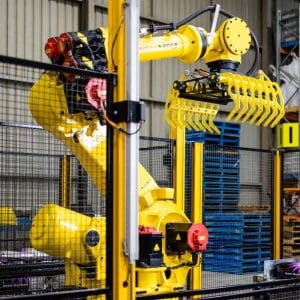
Productivity isn’t just output per hour. It’s also what you’re not spending on injuries, workers compensation, and replacing staff who’ve left because the work is too physical. Repetitive heavy lifting at end-of-line is one of the more consistent sources of musculoskeletal injury in manufacturing, and that cost is rarely visible until it’s already accumulated.
Claypro Australia in regional Victoria made the investment primarily to get their team out of a dusty, physically demanding environment. The productivity benefit was real, but the injury risk removal was the primary driver. Both delivered from day one.
Is the Investment Worth It for Your Operation?
Most of the palletising cells we build range between $100k and $150k, fully installed. For most applications, payback is within two years. The cell is a depreciating asset and fully tax deductible. Leasing options are available and in some cases cost less per month than the labour the robot replaces.
If you’re looking at robot palletising for your facility, get in touch for a straight conversation about what’s realistic for your application. We work with manufacturers across Australia.
Learn more about our Robot Palletising Systems.
Frequently Asked Questions
How much faster is a robot palletiser than manual?
It depends on the application, but most palletising robots can handle up to 10 cycles per minute consistently, without variation through the shift. Manual rates typically slow significantly over a long shift.
Can it handle multiple products?
Yes. Multiple programs can be stored and selected by the operator. Different products, patterns, and layer counts without hardware changes.
What’s the payback period?
For most applications, within two years. The cell is also a depreciating asset, fully tax deductible, which improves the effective return further.
Can it run overnight?
Yes, provided the cell is correctly designed with appropriate safety systems. We build to Australian standards and provide risk assessment documentation at project completion.
Do you work outside Victoria?
Yes. We work with manufacturers across Australia and travel to site regardless of location.
Have more questions? Visit our full FAQ page.