In today’s rapidly evolving industrial landscape, Robotic machine tending is transforming the way manufacturers handle production tasks. From small-scale workshops to large manufacturing plants, this technology is revolutionizing operations by improving efficiency, reducing costs, and enhancing workplace safety.
Axistek are about to increase capacity in the coming weeks as their robot system reaches completion.After 12 months of design and development, the robot ran production dry cycles today, realizing the long held dreams of the owners.
The robot cell further expands the advanced manufacturing capabilities of Axistek, and is not the last robot project on the agenda. Axistek chose Automation Solutions to initially consult on what was possible, and then engaged us to provide the safety, programming, and integration portion of the project.
What Is Robotic Machine Tending?
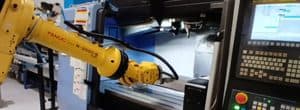
Robotic machine tending refers to the process of using robotic arms or automated systems to load and unload parts, materials, or tools into machines such as CNC machines, lathes, mills, and grinders. This automation eliminates repetitive manual labor, allowing human workers to focus on higher-level tasks that require skill and creativity.
A typical robotic machine tending setup includes an industrial robot, a vision system for precision handling, and integrated software that controls operations. Together, these components create a seamless workflow that can operate 24/7 without fatigue or errors.
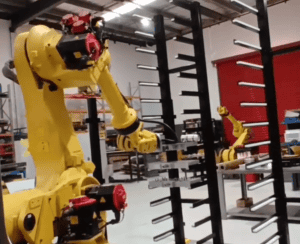
The racks hold 30 pallets which can be loaded up with raw parts ahead of running through the night in ‘lights out’ manufacturing. The operators would then arrive the following morning to 30 pallets of machined parts, ready to do it all again.
Industries Benefiting from Robotic Machine Tending
Robotic machine tending is not limited to one sector. Industries such as automotive, aerospace, electronics, metal fabrication, and medical device manufacturing have embraced this technology to streamline operations. For example:
- Automotive manufacturers use robots to handle heavy parts in CNC machining centers.
- Medical device companies rely on precise robotic handling for intricate components.
- Metal fabrication shops utilize robots to improve efficiency and consistency in part production.
Future of Robotic Machine Tending
With the rise of artificial intelligence and machine learning, robotic machine tending is becoming smarter and more efficient. AI-powered robots can analyze data in real-time, predict maintenance needs, and optimize workflows without human intervention. This innovation is paving the way for “lights-out manufacturing,” where factories can operate autonomously around the clock.
Implementing Robotic Machine Tending

For businesses considering automation, starting with a well-planned strategy is key. Begin by evaluating your production needs, selecting the right robotic system, and training your workforce to manage and maintain the technology. Partnering with experienced automation providers ensures a smooth transition and maximizes the benefits of robotic machine tending.
Axistek are about to increase capacity in the coming weeks as their robot system reaches completion.
After 12 months of design and development, the robot ran production dry cycles today, realizing the long held dreams of the owners.
The robot cell further expands the advanced manufacturing capabilities of Axistek, and is not the last robot project on the agenda.
Axistek chose Automation Solutions to initially consult on what was possible, and then engaged us to provide the safety, programming, and integration portion of the project.
The racks hold 30 pallets which can be loaded up with raw parts ahead of running through the night in ‘lights out’ manufacturing. The operators would then arrive the following morning to 30 pallets of machined parts, ready to do it all again.
Final Thoughts
Robotic machine tending is more than just a trend—it’s the future of modern manufacturing. By increasing efficiency, ensuring precision, and creating safer work environments, robotic systems empower businesses to stay competitive in an increasingly automated world.
Whether you’re looking to improve productivity, reduce operational costs, or enhance product quality, investing in robotic machine tending can take your manufacturing process to the next level.
View the video here.. https://youtu.be/LnOCnj0O1qI