



The Real Benefits of Robot Palletisers: What Actually Matters
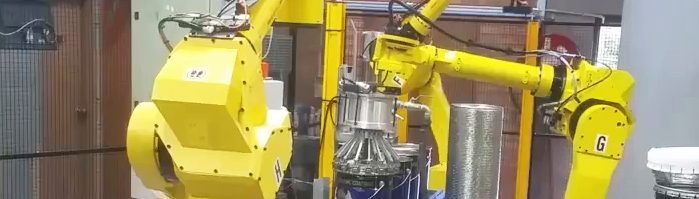
There’s a lot written about the benefits of robot palletisers that reads like it was written for a brochure. This is a more grounded look at what actually changes when you install one, based on what we’ve seen across real projects with real businesses.
Removing the Injury Risk
Repetitive heavy lifting is hard on people over time. Palletising is one of the more physically demanding jobs on a production floor, and the injury risk accumulates quietly until it becomes a workers compensation claim or a long-term absence. It’s the kind of risk that’s easy to underestimate until it’s sitting in front of you.
Claypro Australia in regional Victoria installed a bag stacking robot primarily to get their team out of a dusty, physically demanding environment. Tim from Claypro described it plainly: the job used to be really hard work, people went home sore, and the robot took that over without fuss. Attendance improved, morale improved, and the people who were doing that task are now doing something that doesn’t grind them down.
Hunter Premium Produce in Elmore made the same call, installing robotic bag stacking ahead of anticipated growth specifically to remove the OHS risk from repetitive heavy lifting in their grain bagging operation.
Consistent Output Regardless of Staffing
A robot palletiser runs through breaks, shift changes, and the end of a long Friday shift the same way it ran on Monday morning. Manual palletising slows down as people fatigue through a shift. Stack quality varies. Load stability suffers. A robot eliminates that variation.
For Indoc Pty Ltd in Melbourne’s south east, a specialty paint manufacturer with over 30 years of operation, the labour reliability argument was a deciding factor. When you have production targets and someone calls in sick, end-of-line palletising is often the first thing that backs up. Their Fanuc palletising cells removed that dependency entirely.
Load Quality That Reaches the Customer
Every pallet built to the same pattern, the same layer height, the same orientation. Consistent loads are stable in transit, they don’t damage product, and they arrive at your customer the same way every time. For businesses where freight damage has been a recurring cost, or where load consistency affects their reputation with customers, this is as important as the productivity argument.
Limestone Coast Seeds needed a system to stack 25 to 40kg bags onto steel stillages for export. Consistent, stable loads that could handle the handling involved in export logistics. Six weeks after first contact with Automation Solutions, the system was running. Four years on, Yankalilla Seeds has stacked over 360,000 bags through their cell without a single service call.
Predictable Operating Costs
Once a palletiser is installed, the operating cost is fixed and predictable. No overtime, no agency labour, no variation based on who’s available. For businesses where volume fluctuates, that cost certainty is genuinely valuable. You can meet varying demand without the cycle of hiring and dismissing staff that comes with relying purely on manual labour.
What to Expect from the Investment
Most of the palletising cells we build range between $100k and $150k, fully installed. Payback for most applications is within two years. The cell is a depreciating asset and fully tax deductible. Leasing options are available and in some cases the monthly repayment is less than the labour cost it replaces.
If you’re considering robot palletisation for your facility, get in touch. We work with manufacturers across Australia and give straight answers about whether it’s the right fit for your application.
Learn more about our Robot Palletising Systems.
Frequently Asked Questions
What does a robot palletiser cost?
Most of our robot cells range between $100k and $150k, fully installed. Conveyor infeed and custom tooling may add to this depending on your product and layout.
What’s the typical payback period?
For most applications, within two years. The cell is also a depreciating asset and fully tax deductible, which improves the effective payback further.
Will it reduce our injury risk?
Yes. Removing repetitive heavy lifting from your workforce reduces musculoskeletal injury risk over time. Most of the businesses we work with cite OHS as one of the primary reasons for the investment.
Can it run overnight unattended?
Yes, provided the cell is correctly designed. We build safety systems to Australian standards and provide risk assessment documentation at project completion.
What are the ongoing servicing costs?
Minimal. Annual battery change and hours-based maintenance. We have customers who have run for years without a single service call.
Have more questions? Visit our full FAQ page.