



Robot Programming: What It Involves and Why It Matters
A robot arm is a piece of hardware. What makes it useful is the programming that tells it exactly what to do, in what sequence, at what speed, and how to handle what happens when something goes wrong. Robot programming is where a robot cell goes from being a collection of components to something that actually works reliably in a production environment.
What Robot Programming Covers
At its core, robot programming is the process of defining every movement the robot makes, how it approaches a part, where it picks, how it places, how it moves between positions, and what it does when a fault occurs or a cycle doesn’t complete as expected. For a machine tending cell, that means coordinating with the CNC control. For a palletising cell, it means managing pallet patterns, layer counts, and product orientation. For a press brake cell, it means working with the press cycle and sheet positioning.
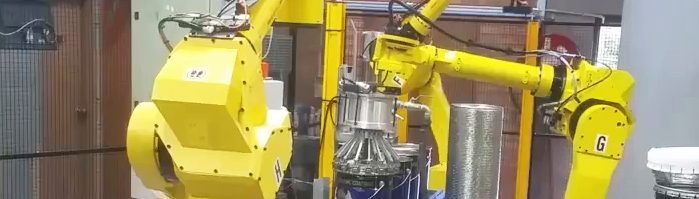
At Automation Solutions & Robotics, all robot programming is done on Fanuc robots. Fanuc is the platform we know best, it’s reliable, well-supported in Australia, and the programming environment is robust for industrial applications. We’ve programmed cells across machine tending, palletising, stacking, and press brake applications, and have experience recommissioning existing Fanuc robots into new applications where the hardware is still sound.
Simulation Before Installation
For more complex cells, we use Fanuc’s RoboGuide simulation software to validate the program before anything is installed on the floor. RoboGuide lets us check reach, confirm cycle times, and identify potential interference issues between the robot and surrounding equipment before commissioning. It’s a design and validation tool, not a substitute for proper on-site commissioning, but it reduces surprises and saves time when the robot is actually running.
PLC Programming Alongside Robot Programming
In most cells, the robot doesn’t operate in isolation. It communicates with a PLC that manages the broader cell logic, coordinates with the machine or conveyor, handles safety inputs, and provides the operator interface. Robot programming and PLC programming need to work together, which is why having one engineer handle both is simpler than splitting the work across separate contractors.
We work with Siemens (TIA Portal), Omron, and Rockwell Allen-Bradley for PLC programming. The platform depends on what’s already in your facility or what suits the application best. All PLC code is structured, documented, and written so it can be maintained and modified without starting from scratch every time.
Recommissioning Existing Robots
Not every robot programming job starts with new hardware. We’ve recommissioned existing Fanuc robots into new applications where the mechanical hardware is still fit for purpose but the original program is no longer relevant or the application has changed. If you have a robot sitting idle because its original application no longer exists, it’s worth finding out whether it can be redeployed before committing to new hardware.
Getting It Right From the Start
The quality of robot programming shows up over time. A cell that’s been programmed well handles faults cleanly, runs consistently, and is straightforward to modify when your production requirements change. A cell that’s been programmed poorly trips out regularly, is difficult to fault-find, and becomes a liability rather than an asset.
If you’re looking at a new robot cell or need programming support on an existing system, get in touch. We work with manufacturers across Australia.
Learn more about our Industrial Robot Systems.
Frequently Asked Questions
What robot brand do you program?
Fanuc, for all robot applications. It’s the platform we know best and it’s well-supported across Australia.
Do you handle PLC programming as well as robot programming?
Yes. In most cells the two need to work together, and having one engineer handle both avoids the coordination issues that come from splitting the work.
Can you recommission an existing robot into a new application?
Sometimes. It depends on the robot model, controller age, and whether the hardware suits the new application. We assess this as part of the initial conversation.
What PLC platforms do you work with?
Siemens TIA Portal, Omron, and Rockwell Allen-Bradley. All three are commonly used in Australian manufacturing.
What if something goes wrong after commissioning?
You contact the engineer who wrote the program directly. Not a call centre, not a ticketing system.
Have more questions? Visit our full FAQ page.