



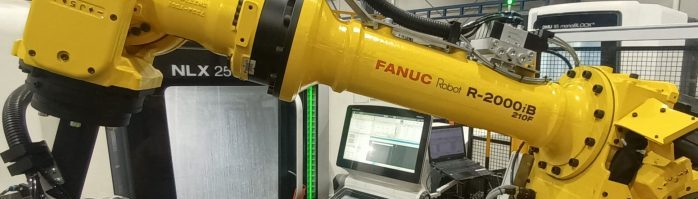
Robotic automation in Australia isn’t being driven by large multinationals. A significant part of the growth is coming from smaller, family-owned manufacturers who’ve worked out that the technology is accessible, the return is measurable, and the alternative, relying on manual labour for repetitive high-volume work, is becoming harder to sustain.
Automation Solutions & Robotics and Complete CNC Solutions work together to provide industrial automation and machine tool services to Australian manufacturers. Between robot programming, PLC integration, safety systems, and machine tool expertise, the two businesses cover the full picture from concept through to commissioning.
Lights-Out Machining: The Clearest Case for Automation
The most straightforward argument for robotic automation in a machining environment is what happens when your people go home. A CNC machine that sits idle overnight is production capacity you’re not using. A tending robot changes that.
Axistek in Derrimut spent 12 months developing their lights-out cell. The result is a custom 30-pallet rack on a Doosan machine that runs overnight. Operators load raw parts before they leave, the robot works through the night, and they return each morning to 30 pallets of finished components. The same machine, producing significantly more.
Omega Technical Engineering in Wodonga runs two Fanuc robots across Okuma machines including a Multus. The robots keep machines running through the day and extend production into after-hours. For a business that also manufactures Ross Performance Parts, that extra capacity directly supported their growth.
Reducing Labour Dependency Without Reducing Headcount
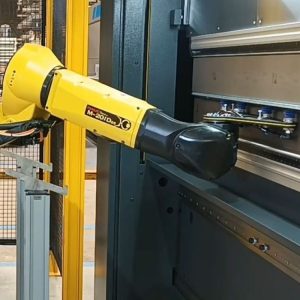
A common concern is that automation means replacing people. In most of the applications we work on, that’s not what happens. The robot takes over the repetitive physical work, the loading and unloading and the stacking, and the people move to work that needs them. Programming, quality, setup, and the tasks a robot can’t do.
For businesses in regional areas where finding and retaining people for physically demanding, repetitive roles is genuinely difficult, that redeployment argument is often more compelling than the cost argument.
What the Integration Actually Involves
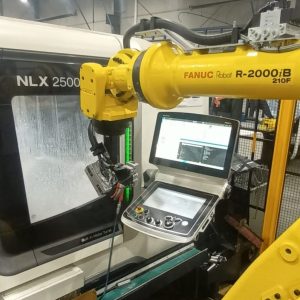
A robot cell that works reliably is one that’s been properly integrated. The robot communicates with the machine control. The PLC manages the cell logic and handles faults cleanly. The safety system allows operators to interact with the cell without stopping production unnecessarily. The HMI is set up so your team can run it day-to-day without needing an engineer on site.
At Automation Solutions & Robotics, we handle Fanuc robot programming and PLC integration across Siemens, Omron, and Rockwell platforms. Complete CNC Solutions brings machine tool expertise, maintenance, and calibration services alongside. Between the two businesses, Australian manufacturers have access to automation and machine tool capability in one place.
Regional Manufacturers
A lot of the businesses we work with are outside the major metro areas, where larger automation companies don’t operate. Omega in Wodonga is one example. We travel to site and handle the full project regardless of location, and provide remote support ongoing after commissioning.
If you’re looking at robotic automation for your manufacturing facility, get in touch for a straight conversation about what’s involved and whether it makes sense for your application.
Learn more about our Machine Tending Robot Systems.
Frequently Asked Questions
What is robotic automation?
In a manufacturing context, it typically means a robot integrated into a production cell to perform a defined repetitive task, machine tending, palletising, stacking, or material handling, so your machines and processes run with less manual labour.
Is it suitable for smaller manufacturers?
Yes. Most of the businesses we work with are small to medium family-owned operations. The application needs to suit, but size alone isn’t the limiting factor.
What does a robot cell cost?
Most of our robot cells range between $100k and $150k, fully installed. The cell is a depreciating asset and fully tax deductible.
Do you work in regional areas?
Yes. We work with manufacturers across Australia and travel to site regardless of location.
What’s involved in lights-out machining?
A robot tending cell that runs unattended overnight. The cell needs to be correctly designed with appropriate safety systems, fault handling, and a raw material feed that doesn’t require operator intervention mid-run.
Have more questions? Visit our full FAQ page.