



End-of-line palletizing is often the last thing manufacturers think about automating, and one of the first places where manual processes cause problems. Inconsistent stacks, staff injuries, bottlenecks when someone calls in sick. Robotic palletizing solutions address all of those directly.
The Problem Worth Solving
Manual palletizing is physically demanding, repetitive, and hard to staff reliably. It’s the kind of role with high turnover and a steady rate of musculoskeletal injuries over time. When it’s understaffed or the operator slows down through a shift, the whole line backs up. And because palletizing is the last step before dispatch, any inconsistency there affects load stability, freight damage, and how your product arrives at your customer.
What Australian Businesses Have Done With It
Claypro Australia in regional Victoria installed a bag stacking cell to get their team out of a physically demanding, dusty environment. Tim from Claypro put it simply: the setup was smooth, they were up and running much quicker than expected, and from day one the robot was doing exactly what they hoped. His words: ‘You don’t need to be in the city to run top-shelf automation.’
Limestone Coast Seeds needed a system to stack 25 to 40kg bags onto steel stillages for export markets. They’d been quoted significantly more by others and couldn’t find anyone who could meet their specific requirements. Six weeks after first contact with Automation Solutions, the robot was in the ground and running. Director Greg Excell noted the cost was nearly half of competing quotes, and that Brett understood their requirements immediately.
Yankalilla Seeds in regional South Australia has now run their bag stacking cell for four years. Over 360,000 bags stacked, zero service calls, no service contract. Remote support from Victoria when needed, but the system has simply not required it.
Hunter Premium Produce in Elmore installed robotic bag stacking ahead of expected growth, removing the OHS risks from repetitive heavy lifting in their grain bagging operation.
What a Robotic Palletizing Solution Looks Like
The core of the system is a robot picking product from a conveyor infeed and placing it onto a pallet in a defined pattern. Around that, you need conveyor infeed, end-of-arm tooling matched to your product, pallet handling, safety guarding, and PLC logic that manages the cell and handles faults without requiring constant operator intervention.
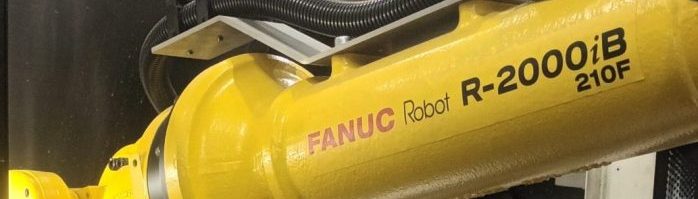
At Automation Solutions & Robotics, we use Fanuc robots for palletizing and handle the complete system. We’ve also built systems for concrete product handling where the vacuum gripper was engineered for a 45kg paver requirement and demonstrated on-site holding that load plus an additional 80kg with no yield (SVC Group). That kind of on-site proof before sign-off is standard practice.
Handling Multiple Products
Robotic palletizing solutions can store multiple programs and switch between them with minimal operator input. Different products, different patterns, different layer counts, all handled by the same robot with a program change rather than a hardware change.
If palletizing is a problem in your operation, get in touch. We work with manufacturers across Australia, including regional areas, and travel to site.
Learn more about our Robot Palletising Systems.
Frequently Asked Questions
What does a palletizing robot cell cost?
Most of our robot cells range between $100k and $150k, fully installed. Conveyor infeed systems may add $20k or more depending on the design.
How quickly can you get a system installed?
Most installations complete within 6 to 8 weeks. Limestone Coast Seeds had a robot in the ground within 6 weeks of first contact.
What about ongoing servicing costs?
Minimal. An annual battery change keeps positioning memory intact, and routine maintenance is based on hours run. Yankalilla Seeds ran 360,000 bags over four years without a single service call.
Do you work in regional areas?
Yes. A significant part of our work is in regional Australia. We travel to site and provide remote support ongoing.
Can it run unattended overnight?
Yes, provided the cell is designed correctly. We build safety systems to Australian standards, including risk assessment documentation at project completion.
Have more questions? Visit our full FAQ page.