



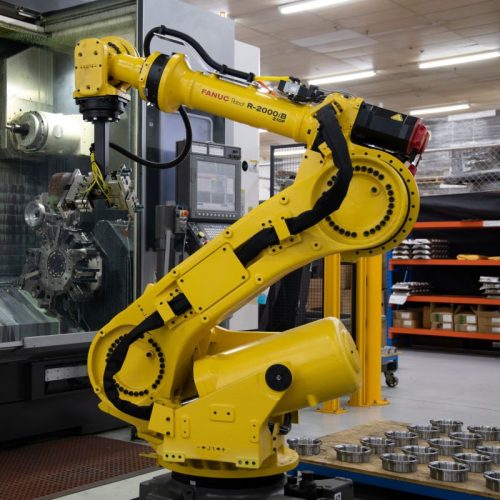
Robots are ready to operate 24/7
In today’s fast-paced manufacturing and logistics industries, efficiency, accuracy, and speed are more important than ever. One of the most impactful advancements driving this transformation is the adoption of Palletising robot systems. These automated systems are designed to stack, arrange, and organize products onto pallets with unmatched precision, reducing labor costs and boosting productivity. Whether in warehouses, factories, or distribution centers, palletising robots have become essential for businesses aiming to stay competitive in the era of automation.
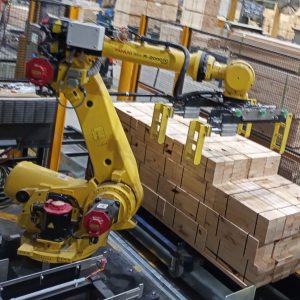
- Mitigating Labour Shortages
Industrial robots are a game-changer for businesses facing labor shortages. With the ability to operate 24/7 without fatigue, these robots ensure that palletizing tasks are completed efficiently and consistently, even in the absence of sufficient human workers. This continuous operation is crucial for maintaining production schedules and meeting delivery deadlines.
- Maintaining High Precision and Consistency
The precision and consistency of robots are unmatched. Equipped with advanced sensors and programming, robots handle products with incredible accuracy, ensuring that stacks are uniform and secure. This level of precision reduces the risk of product damage during transit and improves overall space utilization in warehouses and during shipping.
- Flexibility to Handle Diverse Tasks
Modern industrial robots are versatile, capable of being programmed for various products, sizes, and shapes. This adaptability is especially important in industries with fluctuating demands and diverse packaging requirements. By quickly reprogramming robots, businesses can seamlessly transition between different palletizing tasks without significant downtime.
- Enhancing Workplace Safety
Palletizing is physically demanding and potentially hazardous for human workers, often involving heavy lifting and repetitive motions. Industrial robots take over these demanding tasks, improving workplace safety and reducing the risk of injuries. This not only protects workers but also helps companies comply with safety regulations.
- Cost Efficiency
While the initial investment in industrial robots can be high, the long-term cost savings are substantial. Robots reduce labor costs, minimize product damage, and decrease downtime due to their reliability and efficiency. These savings translate to a very quick return on investment, making robots a financially prudent choice for businesses facing labor shortages.
Typically a robot palletising cell supplied by Automation Solutions can see payback within 2 years, as well as having tax incentives such as depreciation against the asset.
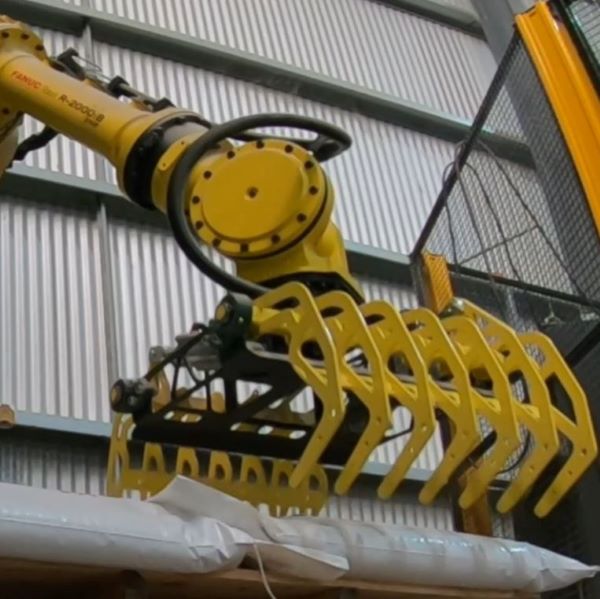
In an era where labor shortages are a pressing concern, industrial robots provide a reliable solution for palletizing. Their ability to operate continuously, maintain high precision, adapt to various tasks, and enhance safety makes them indispensable in modern manufacturing and logistics. As technology advances, the role of robots in addressing labor challenges will only become more significant, ensuring that businesses can continue to thrive despite workforce constraints.
The Future of Palletising Robots
Advancements in artificial intelligence (AI), vision systems, and machine learning are taking Palletising robot systems to the next level. Future systems will become even more intelligent, able to analyze real-time data, adapt to changes in production lines, and integrate seamlessly with warehouse management systems (WMS) and enterprise resource planning (ERP) platforms.
Collaborative robots, or cobots, are also gaining popularity. These robots can work safely alongside human workers, combining human decision-making skills with robotic efficiency for optimal results.
Cost Efficiency
While the initial investment in industrial robots can be high, the long-term cost savings are substantial. Robots reduce labor costs, minimize product damage, and decrease downtime due to their reliability and efficiency. These savings translate to a very quick return on investment, making robots a financially prudent choice for businesses facing labor shortages.
Typically a robot palletising cell supplied by Automation Solutions can see payback within 2 years, as well as having tax incentives such as depreciation against the asset.
In an era where labor shortages are a pressing concern, industrial robots provide a reliable solution for palletizing. Their ability to operate continuously, maintain high precision, adapt to various tasks, and enhance safety makes them indispensable in modern manufacturing and logistics. As technology advances, the role of robots in addressing labor challenges will only become more significant, ensuring that businesses can continue to thrive despite workforce constraints.
Conclusion
Palletising robot systems are no longer just an option—they are a necessity for businesses aiming to improve efficiency, reduce costs, and maintain high standards of accuracy and safety. By integrating these systems into their operations, companies can stay ahead in an increasingly competitive market while preparing for the future of smart automation. Whether you are in manufacturing, logistics, or retail, investing in a palletising robot system is a step toward greater productivity and long-term success.
See a varying assortment of previous palletising robot systems here..
https://www.automationsolutions.com.au/palletising-robot-systems/