



Most business owners investing in automation focus on the robot. That’s understandable, it’s the visible part. But PLC code quality matters just as much as the robot itself, and it’s where a lot of automation projects quietly fall apart years down the track.
At Automation Solutions & Robotics, PLC programming is a core part of every project we deliver. Here’s why it matters and what to look for.
What a PLC Does
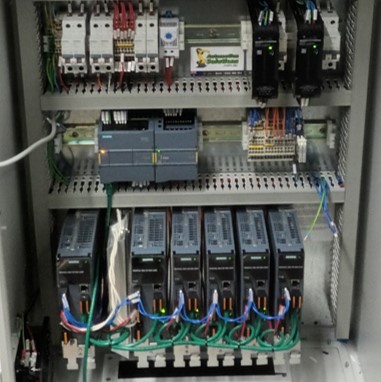
A PLC, Programmable Logic Controller, is the industrial computer that tells your equipment what to do and when. It monitors sensors and inputs, executes logic, and controls outputs. Start the conveyor when a part is detected. Stop the machine when a guard opens. Run a sequence of steps and handle faults when something goes wrong.
Unlike a standard computer, a PLC is built specifically for industrial environments. It handles vibration, dust, temperature extremes, and electrical noise that would kill ordinary hardware. It runs deterministically, meaning it executes its program in a predictable, repeatable cycle. That reliability is what makes it suited to controlling machinery.
Why PLC Code Quality Matters
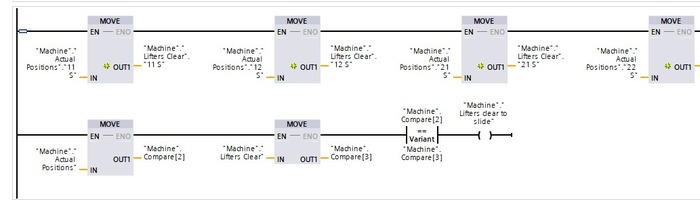
A PLC running poorly written code is one of those problems that doesn’t show up immediately. The system works, until something changes or goes wrong, and then troubleshooting becomes slow and painful. We’ve seen systems where modifying one part of the logic broke something unrelated, because the original code was never structured properly or documented.
Good PLC programming is structured, clearly named, and documented so that someone coming to it cold can understand what it does. That matters whether it’s us doing future modifications or another engineer years later. Code that makes sense saves significant time and money across the life of the system.
Integration Across the System
A PLC rarely operates in isolation. On most projects it’s communicating with an HMI, variable speed drives, safety systems, a robot controller, and sometimes higher-level systems. Getting those interfaces right, the correct protocols, proper data mapping, sensible fault handling, is where automation projects often run into trouble when the integration work is split across multiple contractors.
We handle the full system. PLC programming (Siemens TIA Portal or Rockwell Studio 5000 depending on your existing setup), Fanuc robot integration, drive configuration, safety system programming, and HMI development. Everything is commissioned together, not handed off in pieces.
Modifications and Existing Systems
Not every PLC job starts from scratch. A lot of what we do is working on systems already in service, adding equipment to an existing line, fixing logic that has never worked properly, or upgrading hardware that’s becoming a reliability risk. If you’ve got a system held together with workarounds, or one that trips out regularly without a clear reason, that’s worth a conversation.
If you need PLC programming support for a new build, a modification, or a fault you can’t pin down, get in touch. We’re based in Langwarrin, Victoria.
If you’re dealing with a PLC controls upgrade specifically, see what’s involved in a real controls upgrade. And if you’d rather deal directly with the person writing the code, meet the engineer behind our Melbourne PLC programming work.
Learn more about our PLC Programming services.
Frequently Asked Questions
Will I be able to understand how to use it?
Yes. We design HMIs to be icon-based and intuitive. You don’t need technical knowledge to operate the system day-to-day.
What platforms do you work with?
Primarily Siemens (TIA Portal) and Rockwell Allen-Bradley (Studio 5000). These are the most common platforms in Australian manufacturing and we know both well.
Can you modify our existing system?
Yes. We regularly modify and upgrade systems already in service, adding new equipment, fixing logic issues, or upgrading aging hardware before it becomes a reliability problem.
How reliable are PLC-controlled systems?
Very. PLCs are built specifically for industrial environments and run continuously for years with minimal maintenance. The weak point is usually poor programming or ageing hardware, both of which can be addressed.
What if something goes wrong after installation?
We don’t disappear after commissioning. If there’s a fault or something needs adjusting, you’re calling the person who built the system.
Have more questions? Visit our full FAQ page.