



If you’re looking at robotic palletizing solutions, you’re probably already aware of the basic argument: replace repetitive manual stacking with a robot that runs consistently and doesn’t get tired. That part is straightforward. The part that matters more is whether the system will actually work in your facility, with your product, on your floor.
Here’s a practical look at what’s involved and what to think about before you commit.
What a Palletizing Robot Actually Does
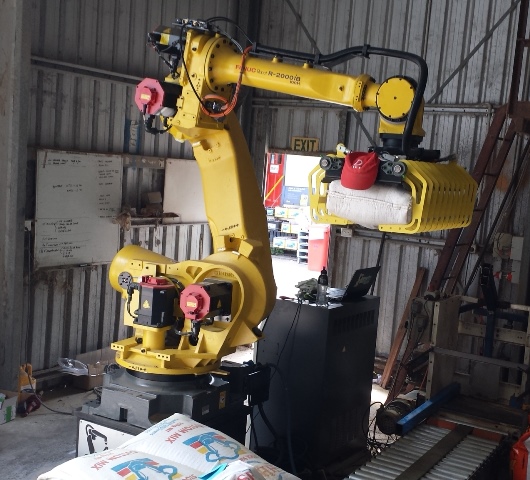
A palletizing robot picks product from a conveyor infeed and places it onto a pallet in a defined pattern. When the pallet is full, it can be moved out for wrapping and dispatch while a new one comes in. That’s the core function. Around it, you need conveyor infeed, end-of-arm tooling matched to your product, a pallet dispenser or manual pallet loading, safety guarding, and PLC control that ties it all together.
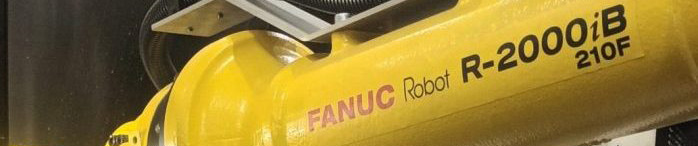
At Automation Solutions & Robotics, we use Fanuc robots for palletizing applications. They handle significant payloads, have the reach to build full pallet heights, and are reliable enough to run in a production environment without ongoing drama. We’ve built systems handling concrete pavers where the gripper was tested to hold 45kg plus an additional 80kg load in demonstration, well beyond the rated requirement, to give the client confidence before sign-off.
The Real Benefits
The productivity case is obvious. A robot palletizing system runs through breaks, shift changes, and weekends. Your end-of-line capacity becomes consistent and predictable regardless of staffing. For operations where palletizing has been a bottleneck, or where you’ve been relying on staff who are difficult to retain in that role, the impact is immediate.
The less obvious benefit is load quality. A robot builds every pallet to the same pattern, at the same layer height, with the same consistency. That reduces product damage in transit, improves load stability, and means your customer receives product the same way every time.
Flexibility Across Products
A common concern is being locked into one product. Modern robot palletising systems can store multiple programs and switch between them with minimal operator input. If you run several SKUs, each with different patterns or layer counts, the system can handle them without hardware changes. If your product range evolves, the programs can be updated.
What the Integration Work Involves
Getting a palletizing cell right requires more than buying a robot. The tooling has to suit your product, the conveyor infeed has to present product at the right position and rate, the safety system has to allow your team to interact with the cell without stopping production unnecessarily, and the PLC logic has to handle faults cleanly so your operators aren’t stuck waiting for someone to restart the system.
We handle all of that as a complete system, designed, built, and commissioned by one engineer. No separate contractors, no gaps in responsibility.
If you’re looking at palletizing automation for your facility, get in touch for a straight conversation about what’s involved. We’re based in Langwarrin, Victoria.
Learn more about our Robot Palletising Systems.
Frequently Asked Questions
What does a palletizing robot cell cost?
Most of our robot cells range between $100k–$150k, fully installed. Conveyor infeed systems may add $20k+ depending on the design.
How much floor space does it need?
The robot footprint is roughly the size of one pallet. Safety guarding can be designed around your available space.
Can it handle different products or pallet patterns?
Yes. Multiple programs can be stored and selected by the operator. Different patterns, layer counts, and product types can all be accommodated without hardware changes.
How long does installation take?
Most installations complete within 6–8 weeks. On-site commissioning typically involves around a three-day production interuption.
What about ongoing servicing?
Minimal. Annual battery change, routine maintenance based on hours run. Fanuc technicians are available across Australia for anything beyond routine upkeep.
Have more questions? Visit our full FAQ page.