



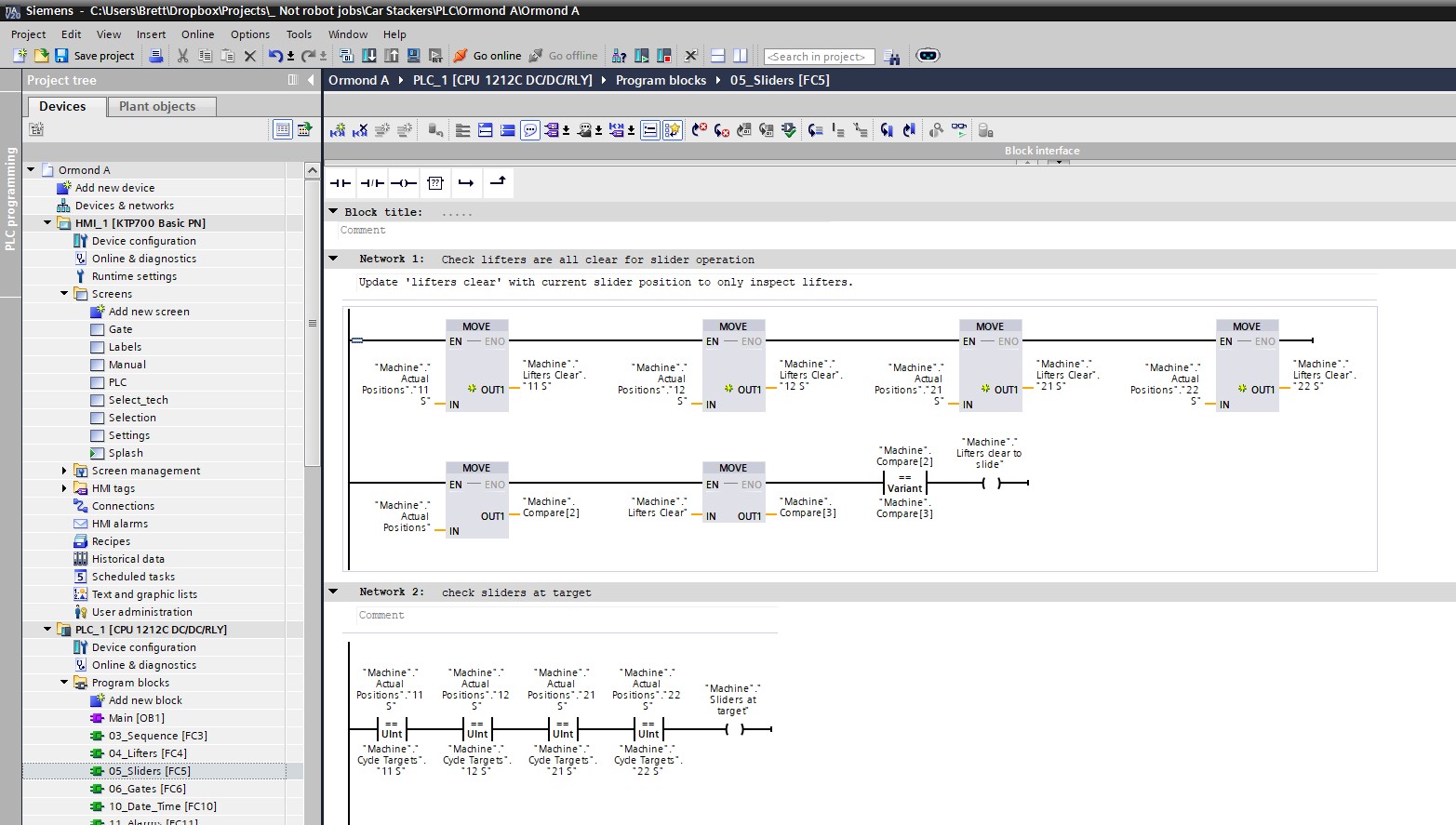
The Siemens S7-1200 is the PLC we use most often at Automation Solutions & Robotics, and for good reason. It’s compact, capable, cost-effective for small to medium applications, and programmed through TIA Portal which is a solid, well-documented environment to work in. For manufacturers across Melbourne and regional Victoria who need reliable PLC programming without paying for more hardware than the application warrants, the S7-1200 hits the mark.
What Makes the S7-1200 Well Suited to Most Applications
The S7-1200 is a compact CPU with integrated I/O, which keeps the footprint small and the wiring clean on smaller machines and cells. It supports Profinet as the standard fieldbus and can also communicate on Ethernet/IP, which matters when you’re integrating with a mixed environment or connecting to equipment from other vendors.
The failsafe version (S7-1200F) handles safety functions directly on the same hardware, which simplifies the cabinet design on applications that need safety-rated I/O without requiring a separate safety PLC. For straightforward safety requirements, this can be a more practical and cost-effective solution than adding dedicated safety hardware.

TIA Portal: What It Means in Practice
All Siemens S7-1200 programming is done in TIA Portal. It’s a well-structured environment that handles PLC programming, HMI configuration, and network setup in one place. The code is clear, the diagnostics are useful, and the documentation tools make it straightforward to produce something maintainable.
That last point matters. We write code that someone else can understand and work with. Whether it’s your maintenance team fault-finding at 2am or another engineer modifying the system years later, code that’s structured and documented saves time and money across the life of the system.
New Builds and Existing Systems
A lot of Siemens PLC programming work isn’t new builds. It’s modifying existing S7-1200 installations, adding new equipment to a running system, fixing logic that’s never worked correctly, or upgrading from older Siemens hardware to the S7-1200 platform. We work on systems we didn’t build originally, and we give you a straight assessment of what’s involved before any work starts.
Integration with the Full Cell
A PLC doesn’t operate in isolation. On most projects the S7-1200 is communicating with an HMI, variable speed drives, safety I/O, a Fanuc robot controller, and sometimes higher-level systems. Getting those interfaces right, the correct protocols, proper data mapping, sensible fault handling, is where a lot of automation projects run into trouble when the work is split across contractors.
We handle the full system. PLC programming, robot integration, HMI development, and commissioning. Everything tested together before sign-off.
Where We Work
We’re based in Langwarrin, south-east Melbourne, and work with manufacturers across metro Melbourne, regional Victoria, and the rest of Australia. Remote support is available for ongoing needs after commissioning.
If you need Siemens PLC programming for a new build, a modification, or a fault you can’t pin down, get in touch.
Want to know who’s actually behind the code? Meet the engineer. We also handle broader PLC controls upgrades beyond Siemens-specific systems.
Learn more about our PLC Programming services.
Frequently Asked Questions
What Siemens PLCs do you program?
Primarily the S7-1200, which suits most small to medium applications. We also work with other Siemens platforms where required.
Do you work on existing Siemens systems you didn’t build?
Yes. We regularly modify and fault-find on existing installations regardless of who built them originally.
Can you integrate the S7-1200 with non-Siemens equipment?
Yes. The S7-1200 supports Profinet and Ethernet/IP, which covers most industrial devices. We handle the integration as part of the project.
What if something goes wrong after commissioning?
You contact the engineer who built the system directly. Not a call centre, not a support ticket system.
Do you work outside Melbourne?
Yes. We work across Victoria and Australia, and provide remote support for ongoing needs after commissioning.
Have more questions? Visit our full FAQ page.